Male physiology
Fact file on sperm
Physiology of the female fertility cycle
The female cycle is usually referred to as the menstrual cycle,
menstruation being the most prominent event, however for our purposes, we will
use the term fertility cycle, placing the emphasis on the cyclic changes of
fertility.
Cycles vary in length from 23 days or less in a short cycle, to over 35 days
in a long cycle. Few women have an absolutely regular menstrual cycle, and a
variation of up to 7 days is perfectly normal. For convenience, we will use an
average length cycle of 28 days.
Hormonal changes in the fertility cycle Pre-ovulatory phase - controlled by FSH and oestrogen Post-ovulatory phase - controlled by progesterone
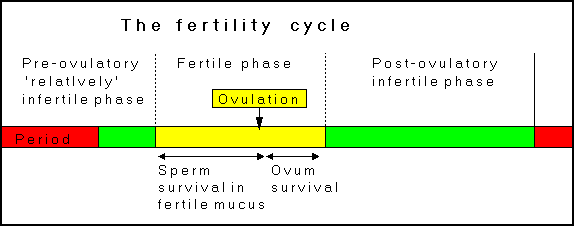
This figure illustrates an average fertility cycle of 28 days. The first day
of menstruation is day 1 of the cycle. Subsequent days are numbered up to
but not including the first day of the next menstrual period. A number of
infertile days follow menstruation - this is the pre-ovulatory relatively
infertile phase. The fertile phase occurs either side of ovulation. The
first sign of cervical mucus designates the onset of the fertile phase,
because sperm can survive in fertile mucus awaiting ovulation. After
ovulation, time must be allowed for ovum survival and the possibility of a
second ovulation occurring within 24 hours. The post-ovulatory infertile
phase is confirmed by a combination of temperature and mucus signs about
three days after ovulation. This phase lasts until the onset of the next
menstrual period. The post-ovulatory infertile phase is the most effective
in avoiding pregnancy.
The post-ovulatory phase or interval between ovulation and the next
menstrual period remains fairly constant - around 14 days. As cycles vary
greatly in length, it follows that the interval between menstruation and
ovulation (pre-ovulatory phase) must constitute the variable length of the
cycle.
A man is always potentially fertile, whereas a woman‘s fertility recurs on a
cyclical basis. For this reason we have to look in more detail at the woman‘s
physiology to understand the phases of fertility and infertility.
Sperm remaining in the vagina are destroyed within hours by the acidity of
the vaginal secretions.
For this reason genital contact or withdrawal method (‘being careful‘)
could cause pregnancy if fertile mucus is present at the vaginal entrance.
The fertility cycle is under the control of sex hormones. It may be
conveniently divided into two phases - the phase before ovulation
(pre-ovulatory) and the phase after ovulation (post-ovulatory)
The pituitary gland at the base of the brain secretes FSH (follicle-stimulating
hormone) which, stimulates the ripening of follicles in the ovary. The ripening
follicles produce increasing amounts of oestrogen.
As the oestrogen levels rise approaching ovulation, certain changes take
place:-
When the oestrogens reach a certain
level in the blood, the pituitary gland is stimulated to produce a sudden
surge of LH (luteinising hormone) which precipitates ovulation within 36
hours. The most mature follicle ruptures and releases the ovum. - Ovulation
Changes During the Fertility Cycle

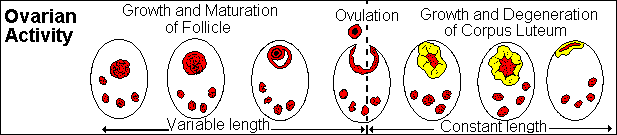

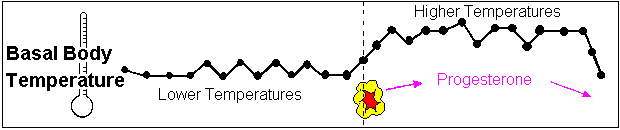
Following ovulation, luteinising hormone or LH causes the ruptured follicle
to develop into the corpus luteum, the flower-like structure in the ovary
which produces the second ovarian hormone - progesterone.
Under the influence of progesterone, the following changes occur :-
The corpus luteum remains for around fourteen days, then it shrivels and
dies; the level of progesterone falls; the temperature drops; and the
endometrium disintegrates,
so completing the cycle.
The cyclic phases of fertility and infertility
Variations in cycle length
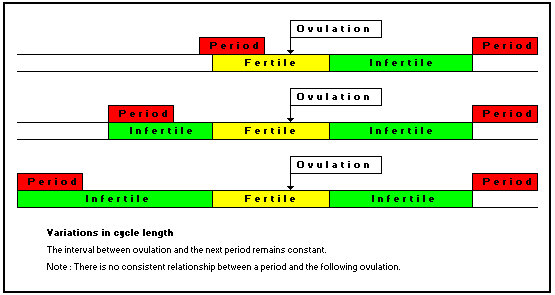
In a short cycle of 21 days, ovulation will occur around day 7 and there
will be no pre-ovulatory infertile days. A normal length cycle (around 28
days) will have a few pre-ovulatory relatively infertile days and a long
cycle (for example 35 days) where ovulation does not occur until around day
21, will have many pre-ovulatory relatively infertile days.
Summary
Indicators of fertility
The most effective method is a multiple indicator approach generally the sympto-thermal
method combining temperature recordings with cervical mucus symptom.